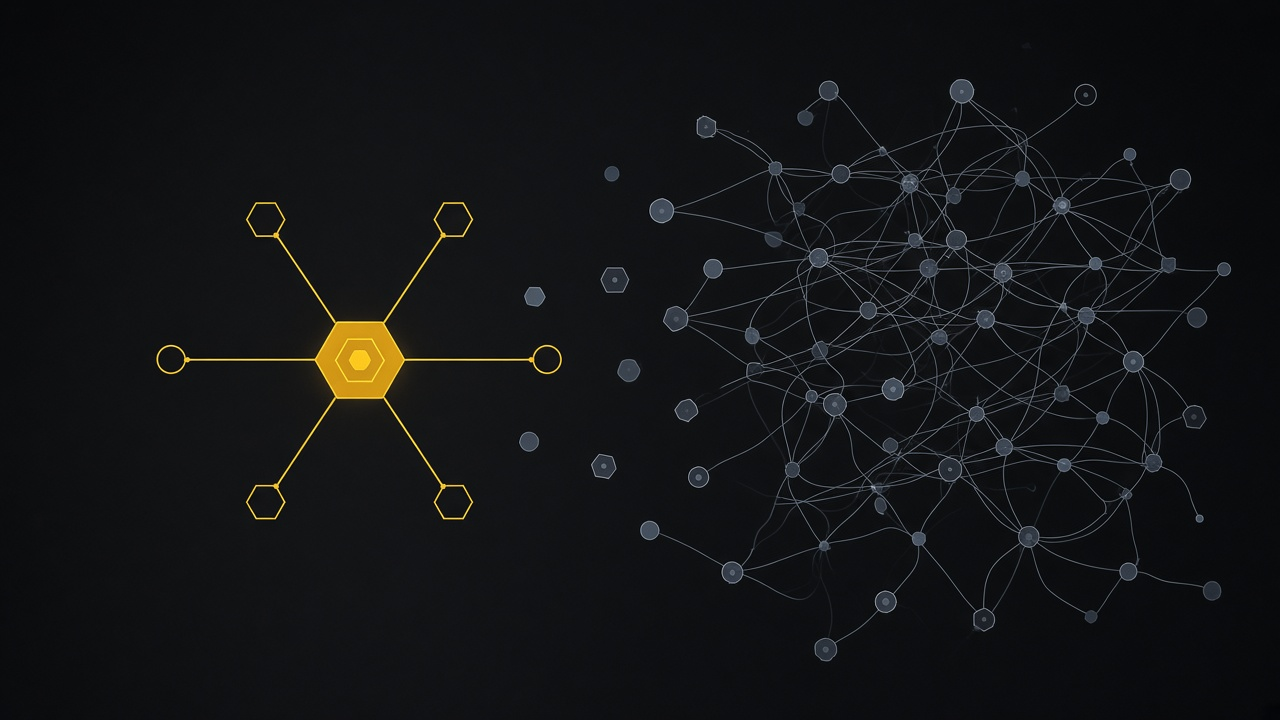
Agent Sprawl Without a Control Plane Is How You Buy Outages
Buying more point agents is not a strategy
If your team spent the last year bolting an AI agent onto every ops tool you own, congratulations: you may have sped up the silos. You did not necessarily connect them.
That is the punchline behind a cluster of September 15, 2026 launches. Vendors are no longer just selling “an agent that does X.” They are selling the layer under the agents—shared context, policy, logging, and who is allowed to touch production.
For founders and operators: more point agents without a control plane is how you buy outages. Governance is not a later upgrade. It is the product decision.
The ops gap coding assistants created
StackGen launched its Autonomous Operations Factory with a clear diagnosis: AI coding raised change volume and deploy frequency; operations absorbed the flood without a matching step change. Work stays split across infrastructure, delivery, observability, and SRE. Point agents bolted onto those functions make each silo faster without connecting them. A delivery agent can “fix” a failed build with no idea the error budget is already spent.
StackGen’s State of Reliability 2026 report attributes roughly 10% of disclosed outages this year to AI—a six-fold rise over three years. The company says it has documented at least nine cases since last year where an agent took destructive action against a live production system on its own.
Sachin Aggarwal, StackGen’s co-founder and CEO: “Writing code with AI is faster than ever; running what it produces is not, and that gap is where enterprises lose money and take on more risk.”
What governed ops looks like when someone builds it
StackGen’s Autonomous Operations Factory is a governed layer for specialized agents sharing context across provisioning, deployment, and incident response. Underneath sits Aiden OS: a shared environment record plus a harness that enforces policy and logs what every agent does. The Aiden World Model covers what is deployed, what changed, what broke, and what fixed it.
Four agents ship on that foundation—infra ops, DevOps, SRE, and observability—and customers can bring their own agents under the same guardrails. Preview is live for AWS, Azure, GCP, and Oracle Cloud; the reliability agent also ships as a free community edition. OneTrust is already using parts of the stack for observability and incident response.
You do not have to buy StackGen to learn from it. The useful claim is architectural: one world model, one harness, one governance model beats a pile of chatbots with production credentials.
Same day, same theme: everyone is selling the control plane
StackGen was not alone on September 15.
- WSO2 Agent Manager landed as an open, self-hostable control plane for sovereign AI governance and agent sprawl. The release cites Gartner’s prediction that the average Fortune 500 will have more than 150,000 agents by 2028, while only 13% of organizations think they have the right AI agent governance.
- Traefik Labs’ Sovereign Trust Plane (in Traefik Hub; GA planned by September 30, 2026) focuses on verifiable evidence—delegated access, policy enforcement, and protected records of what the gateway allowed and refused across model, tool, and API traffic, including independent witnesses for auditors.
- Akuity’s Agentic Control Plane gives agents operational context (deployment history, cluster health, change lineage) while routing requests through identity, permissions, and an agent-aware audit trail.
Different products. Same signal: bolt-on agents without a shared authority model are a liability.
Build vs bolt-on: the real judgment call
You have three paths:
- Bolt on point agents to each tool and hope humans keep context in Slack. Fastest demo. Fastest path to two agents “helping” the same incident.
- Buy a control plane and put new agents under it before they get prod keys.
- Build a thin internal layer—agent identity, approval gates for destructive actions, a shared environment record, an audit trail—then plug best-of-breed agents in.
Most mid-market teams should not invent a world model from scratch. They should invent a policy: no agent writes to production without shared context, logged authority, and a human-owned kill switch. That is fractional CTO work, not a weekend hackathon.
Practical moves this quarter
- Inventory agents like SaaS—including shadow ones with keys in a private channel.
- Separate read/recommend from write/execute; gate promote, delete, and credential changes.
- Demand shared context before shared autonomy.
- Prefer open control planes when you expect multi-vendor agents.
- Treat vendor claims as architecture hints, not homework.
Closing
September 15 was not really about four product launches. It was about the industry admitting the ops half of the AI life cycle is behind. Coding got faster. Running what it produces did not.
Scale judgment before you scale agents. Yellow Coop helps teams make that call—fractional CTO judgment, AI solutions that fit how you ship, and tech projects that do not confuse velocity with reliability. More agents is easy. Safer ops is the product.
Sources
- StackGen launches Autonomous Operations Factory to govern production agents — SiliconANGLE, Sep 15, 2026
- WSO2 Agent Manager brings sovereign AI governance to enterprise agent sprawl — GlobeNewswire, Sep 15, 2026
- Traefik Labs Sovereign Trust Plane — Help Net Security, Sep 15, 2026
- Akuity Agentic Control Plane — Help Net Security, Sep 15, 2026