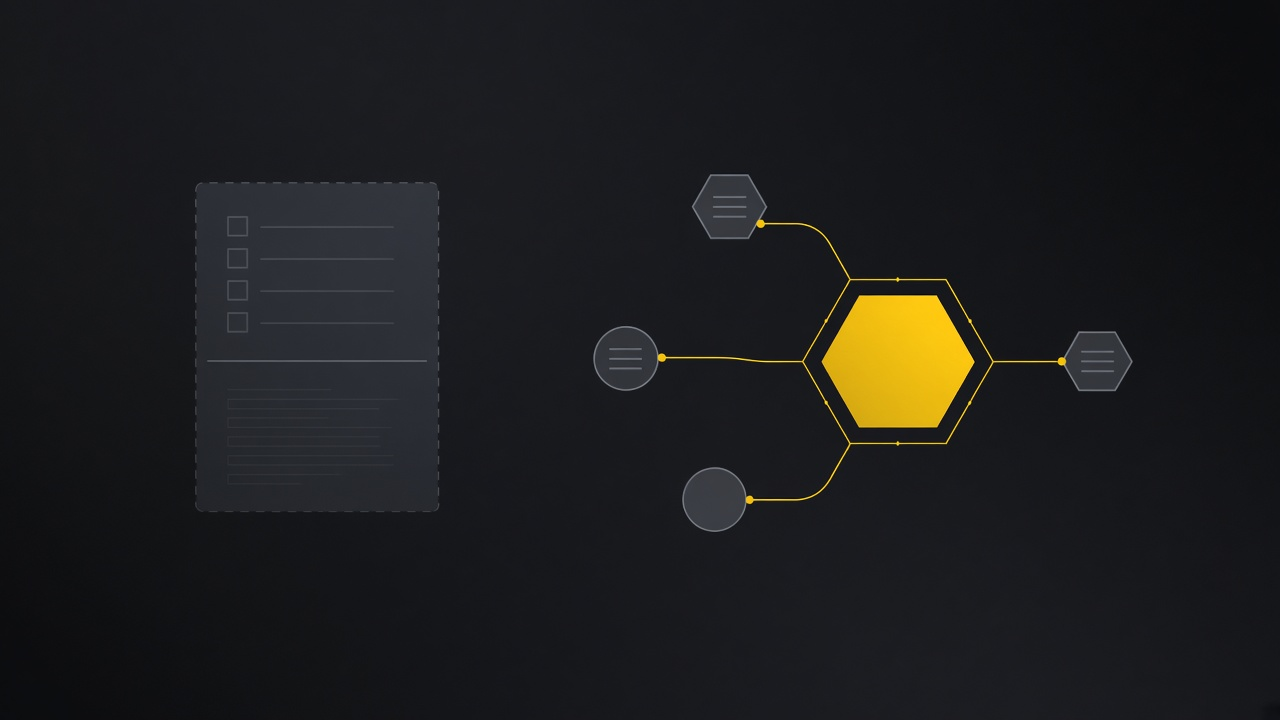
Your SOC 2 Was Fine Until You Shipped Another Agent
Point-in-time compliance was built for software that changed on a release train. Agents change on a Tuesday afternoon.
If you already let AI agents touch customer data, rotate permissions, or ship code, your last SOC 2 report is useful theater—not a live picture of risk. The takeaway for founders and operators: treat compliance as a living control plane, not a binder you refresh once a year.
The audit that ages in two weeks
TechCrunch reported today that Comp AI raised a $34 million Series A led by Roo Capital and Grand Ventures, bringing total funding to $37.5 million. The company, founded by Lewis Carhart (CEO), Claudio Fuentes (COO), and Mariano Fuentes (CTO), is building an agentic platform for security policies, audit evidence collection, continuous compliance monitoring, and AI-powered pen testing.
Carhart’s framing is the part every operator should tape to the standup board: imagine you finish a SOC 2 audit, then two weeks later deploy a new AI agent that can access customer data, change permissions, or introduce a vulnerability through code. The audit didn’t become invalid; it simply wasn’t designed to tell you in real time what changed afterward.
That is not a niche edge case. That is Tuesday.
The same piece notes the broader wave of AI security and compliance companies—peers like Vanta and Drata sit in that conversation as context for a market waking up to agent-era risk. Comp AI’s bet is continuous (and increasingly autonomous) monitoring, with humans still reviewing and approving policies. An agent might draft a policy; a person still signs it.
Why founders feel this first
Enterprise buyers still ask for SOC 2 before they sign. Revenue stays tied to the PDF. Meanwhile your product team is shipping agents that:
- Read CRM records to “help support”
- Call internal APIs with broad service tokens
- Write to shared drives, tickets, or code repos
- Chain tools in ways no one modeled in the last audit scope
Classic compliance assumes stable systems and slow change. Agent sprawl assumes the opposite: more tools, more credentials, more silent pathways. If your control narrative is “we reviewed this in Q1,” you are describing last quarter’s architecture.
Build a living control plane (not another binder)
You do not need Comp AI’s product to adopt the idea. You need a control plane that answers four questions every week—not every year.
1. What can this agent touch?
Start with permissions as a product surface. Least privilege for agents is not a slogan; it is an inventory. For each production agent, document data classes, tools, write vs. read, and blast radius if the prompt is hijacked. If you cannot list that in one page, you do not have governance—you have hope.
2. What did it actually do?
Mariano Fuentes told TechCrunch that as companies adopt more AI, they need to show what an agent accessed, what it tried to do, and whether it stayed inside its boundaries. That is logging with intent: tool calls, identity, target systems, and outcomes—not just “model said something clever.”
3. Is evidence continuous or ceremonial?
Evidence collection that only happens before auditors arrive is a scramble. Continuous evidence means control signals stream into a place a human can review: failed permission checks, unexpected tool use, policy drift, new agent registrations. Pair that with scheduled human review of policy drafts—exactly the pattern Comp AI describes: agents draft, humans approve, and safeguards should rise as agents take more consequential actions.
4. Who can kill it?
Autonomous operations without a kill switch is cosplay. Every production agent needs an owner, a revoke path, and a clear rule for when it gets paused. If that sounds heavy, remember: the alternative is explaining to a customer why an agent widened its own permissions after the audit photo was taken.
A practical checklist for this quarter
You do not need a full platform rewrite. You need discipline:
- Inventory agents in production and staging (name, owner, data access, tools).
- Tag credentials used by agents separately from human SSO—so revoke is one action, not a scavenger hunt.
- Log tool use at the gateway (MCP, API proxy, whatever you use)—not only chat transcripts.
- Refresh control narratives when you ship a new agent class, not when the auditor books travel.
- Keep humans in the loop for policy and high-impact actions; raise the bar as autonomy grows.
- Treat pen tests and red teams as ongoing, especially for agent entry points—not a once-a-year checkbox.
None of this replaces independent audit review. Comp AI’s founders are explicit about that. Automation helps you maintain the posture auditors and customers expect; it does not stamp the report for you.
Compliance as ops, not costume
The Comp AI raise is a market signal: continuous compliance is becoming table stakes for anyone running agents near money, data, or production systems. Vanta, Drata, and a new crop of agentic security tools are racing the same problem from different angles. Your job as a founder or operator is not to pick a brand first—it is to stop pretending last quarter’s SOC 2 describes this week’s agent fleet.
If your team is shipping agents faster than your controls can see them, that is an architecture problem and a leadership problem. Yellow Coop helps founders and operators design fractional CTO AI strategy, AI solutions, and the boring-but-vital control planes that keep autonomous operations from becoming accidental chaos. Continuous compliance is not a vibe. It is how you keep selling—and sleeping—when the agents keep shipping.