
AI Employees Just Raised $77M — Do You Have an Org Chart for Them?
Enterprise AI is done asking for permission to sit in the pilot corner. This week the clearest production-scale signal came from Ema, which announced a $77 million Series B (Sep 23, 2026) led by Creaegis, with Accel, Section 32, and Prosus increasing their stakes. Total funding: $140 million. Product pitch: not another chatbot — "AI employees" that run multi-step work across HR, IT, and finance.
The takeaway for founders is blunt: if investors are underwriting AI workers at Fortune-scale volume, you need the same boring machinery you use for humans — owners, budgets, SLAs, and a kill switch — before the demo team books another lunch.
The takeaway for founders
Stop treating agent platforms as a side experiment owned by whoever signed up for the trial. Treat them like a new labor category that touches payroll-adjacent processes, customer data, and (increasingly) the SaaS stack you already pay for.
What the funding actually signals
According to TechCrunch and Ema's own announcement (both Sep 23, 2026), the company says it has more than 50 active enterprise deals, over 1 million active enterprise users, and more than 5 million actions/queries processed. Named customers include Wipro, Hitachi, ADP, PwC, Google, KPMG, Microsoft, and NTT DATA.
The Wipro deployment numbers are the ones operators should stare at: support for more than 240,000 associates across 65 countries, 100+ workflows, roughly 2.9 million employee queries a year, and response times measured in seconds instead of days. Ema also claims revenue grew 50-fold over two years, bookings above $150 million in total contract value (not ARR), and net dollar retention around 180%.
Whether every vendor metric ages perfectly is beside the point. The market is rewarding platforms that own workflows, not ones that decorate a prompt box.
This is an org design problem, not a model problem
Most mid-market teams still "buy AI" the way they buy snacks for the kitchen: one enthusiastic VP, a credit card, and a Slack channel named #ai-experiments. That model breaks when the product's job description looks like a person.
Ask the uncomfortable questions:
- Who is the manager of record for each AI workflow — by name, not "the AI committee"?
- Which human approves exceptions when the agent stalls or escalates?
- What is the weekly error budget, and who reads the audit trail?
- If the agent replaces a ticket queue, what happens to the humans who used to own that queue?
Ema's founders talk about product-led deployment without a consultant army for every go-live. Great for them. For you, that means your ops muscle has to replace the services wrapper. Nobody is coming to invent your RACI chart.
Outcome pricing changes the budget fight
Ema prices on completed tasks and outcomes rather than seats or tokens, per TechCrunch's reporting. That is a feature for buyers who hate surprise token bills — and a trap for buyers who cannot define "done."
If you cannot write a one-page definition of a successful ticket deflection, invoice exception, or onboarding step, you are not ready for outcome pricing. You will either overpay for vanity completions or under-measure work that still needs a human cleanup crew.
Founder translation: before you sign an outcome contract, force a pilot that measures business outcomes you already track — cycle time, reopen rate, CSAT, cost per ticket — not "messages answered."
The quiet SaaS story underneath
CEO Surojit Chatterjee told TechCrunch that Ema first wraps around existing applications, then some customers path toward reducing or replacing large SaaS dependencies because those apps start behaving "like a database." Services firms, he said, are both partnering with and disrupting their own models.
You do not need to bet the company on SaaS extinction in 2026. You do need a map of which systems an AI employee is allowed to write into, which licenses you would renegotiate if volume shifts, and who owns the data if you later peel the agent layer off.
A practical "AI employee" checklist
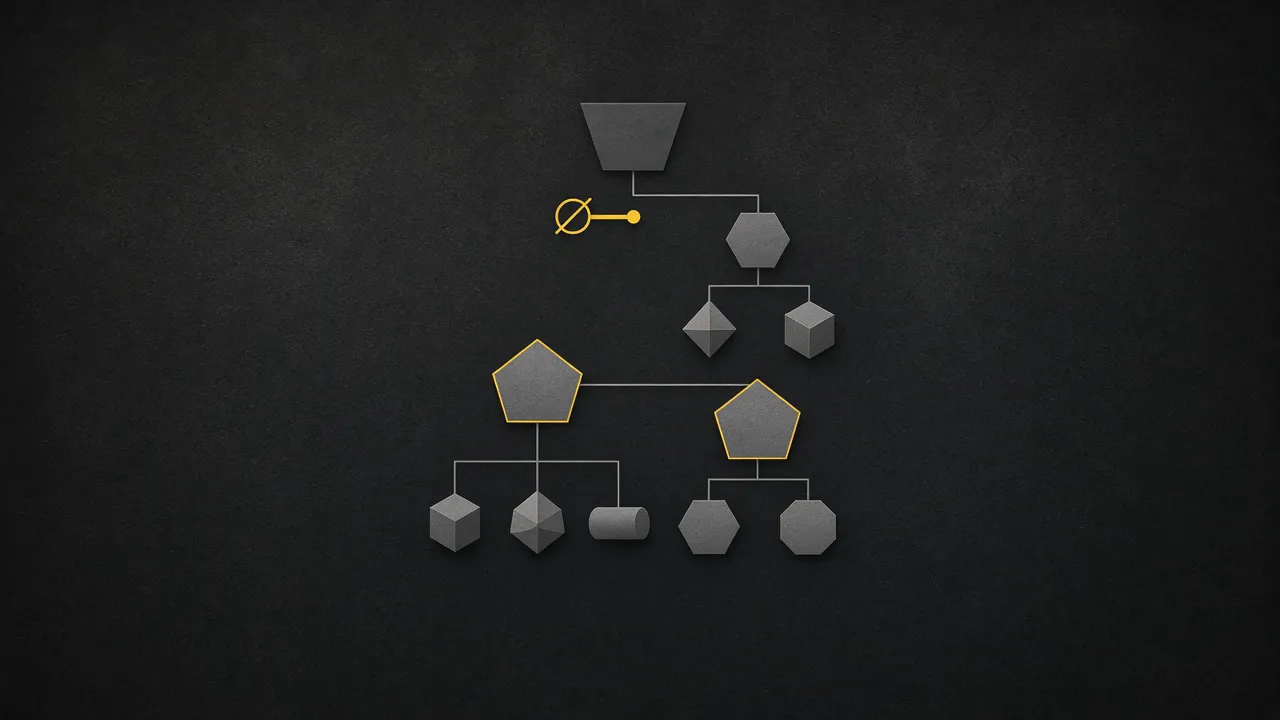
1. Draw the org chart, even if it is ugly
List every agentic workflow in production or paid pilot. Assign a business owner and a technical owner. If either cell is blank, pause expansion.
2. Write job descriptions for bots
Inputs, systems touched, allowed actions, escalation rules, and what "good" looks like in numbers. If you would not hire a contractor without that, do not hire an AI employee without it.
3. Prefer outcome metrics you already believe
Reuse metrics from ITSM, HR ops, or finance close. Inventing a new "AI success score" is how pilots stay forever young.
4. Demand enterprise controls you can audit
RBAC, immutable logs, PII handling, and a notification path when the agent does something unexpected. Ema markets SOC 2 Type II and related certifications; verify what your tenant actually exposes to your security lead.
5. Plan the wrap-then-replace risk
Document which SaaS contracts an agent sits on top of. Put renewal dates on a calendar. Decide in advance whether the agent is a helper or a migration path.
6. Keep a human-shaped kill switch
Know how to disable write access in under an hour without freezing payroll, identity, or customer support. Convenience without an off switch is just leverage against you.
Soft next step
Yellow Coop helps founders and operators stand up fractional CTO coverage for AI and technology projects when the shiny "AI employee" pitch lands before your org chart does. If a vendor is already running multi-step work across HR, IT, or finance and you cannot name the human manager of that workflow, that is the conversation to have this week — not after the next expansion order. Start at contact.
Internal links: Operate, What We Do, How We Engage, Insights.
Sources
- Ema raises Series B — Ema, Sep 23, 2026
- Ema raises $77M as AI starts eating into enterprise software and services — TechCrunch, Sep 23, 2026