
Meta’s Muse Just Joined Tailscale — Treat Agents on Your Network Like New Devices, Not Chatbots
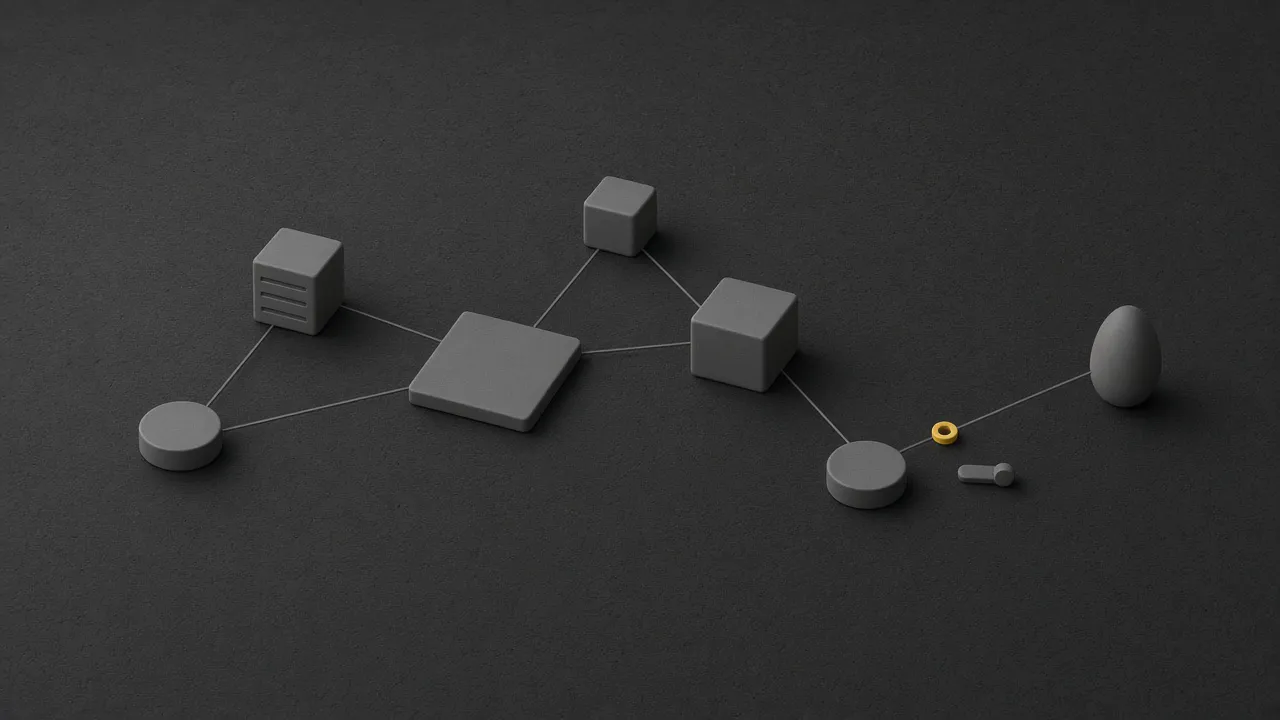
Meta’s personal agent Muse can now join your Tailscale network as its own node. That is not a cute chatbot trick. It is a network membership event — and network membership is how agents turn into privileged devices with paths into your private services.
Tailscale’s Andrew Cunningham walked through the integration: after IdP login, Muse joins the tailnet as a separate node (even if you are already signed into Tailscale on phone or laptop), stays outbound-only by default, asks for explicit confirmation the first time it connects to a device, and supports standing or one-time access you can revoke (Tailscale). Grants and tags apply to Muse like any other node, so deny-by-default least privilege is available on top of Meta’s defaults (Tailscale; Tailscale grants docs).
On Meta’s side, Software Engineer and VP at Meta Superintelligence Labs Tarek Sheasha detailed Muse’s safety harness: connectors with scoped privileges, Sentinel as the sole permission authority for connector actions and network egress, credential surrogation so the agent never sees real tokens, VM isolation, and a planned Confidential VM (Meta AI Research).
The takeaway for owners and operators: when an agent gets onto your private network, treat it like a new privileged device — least privilege grants, tags, and a revoke path — not a clever chatbot.
The operator takeaway
If Muse can see nodes, talk to self-hosted services, or referee Tailscale SSH, it is in the same threat class as a laptop you handed to a contractor. Vendor safety blogs are necessary. Your ACL is the control you actually own.
Tailscale’s own framing is refreshingly honest: plan for the agent to misbehave, and use grants/tags as a brick wall between Muse and anything you did not explicitly allow (Tailscale). That is AI agent containment you can operate without waiting for the model to become perfect at resisting prompt injection.
Why “outbound-only” is not “done”
Outbound-only defaults cut some hijack paths. First-connect confirmation slows down surprise lateral moves. Neither replaces an answer to: which servers can this agent reach, with which protocols, for how long, and who can revoke it at 2 a.m.?
Meta’s architecture assumes the agent may be under attack. Sentinel sits outside the runtime cell for egress and connector approval; credentials live behind authd with surrogate tokens; built-in connectors run with privsep so the model does not hold the keys (Meta AI Research). That is strong agent sandbox security for the vendor-controlled VM. Your tailnet is still your blast radius once you invite the node in.
A practical agent-on-the-network checklist
- Inventory Muse like a device, not an app. Hostname/node identity, owner, purpose, connectors enabled, first-connect approvals granted, and last access review. If it is not on the asset list, it does not get a standing grant.
- Start deny-by-default; add narrow grants. Use Tailscale grants and tags the same way you would for a CI runner or a jump box (Tailscale grants docs). Prefer “Muse can reach Immich read-only” over “Muse is on the tailnet, figure it out.”
- Prefer one-time access for experiments. Standing access is for workflows you have already watched fail safely. Homelab demos and production lookalike environments should not share the same perpetual grant.
- Keep a kill switch you can find half-asleep. Revoke Muse’s access, disable the node, and rotate anything it might have touched through SSH or connectors. Credential hygiene still applies even when the agent “never sees” raw tokens — session state and artifacts live somewhere.
- Separate GenAI data security from network access. Connectors that pull mail, calendar, or files into the Muse VM are a data-plane decision. Tailscale membership is a network-plane decision. Approve them independently. Mixing “it already has Gmail” with “might as well open the lab VLAN” is how containment fails.
- Align security ownership before the demo spreads. Personal agents on company tailnets blur personal and corporate trust boundaries. Decide who can invite agents, who reviews grants, and how CIO / CISO / CTO roles split for AI agent governance — CIO vs CTO vs CISO is a useful map for smaller teams.
Build vs buy without the theater
You do not need to forbid Muse forever. You do need a stance:
- Allow outbound-only agent nodes into non-production segments with tagged, time-boxed grants.
- Keep production systems off the agent’s path until you have approval UX, logging, and a revoke drill that someone has actually run.
- Avoid “the CEO connected Muse to the whole company tailnet because Tailscale made it easy.” Easy is the product. Containment is the job.
Meta’s planned Confidential VM raises the bar for provider access to VM data later (Meta AI Research). It does not change your responsibility for network ACLs today.
Soft next step
Yellow Coop helps owners and operators put fractional CTO / security judgment around AI agent governance: sandbox expectations, network containment, and credential hygiene before personal agents become unpaid peers on your private mesh. If Muse is about to join your tailnet, we can help you treat that join like onboarding a device — not installing a chat app. See our track record, or start at contact.
Internal links: Secure, What We Do, How We Engage, CIO vs CTO vs CISO, Track Record, Insights.
Sources
- Andrew Cunningham — Tailscale blog, Sep 30, 2026
- Tarek Sheasha — Meta AI Research, Sep 8, 2026
- Tailscale grants docs — Tailscale
Found this useful? Share on X